[by LERNACON]
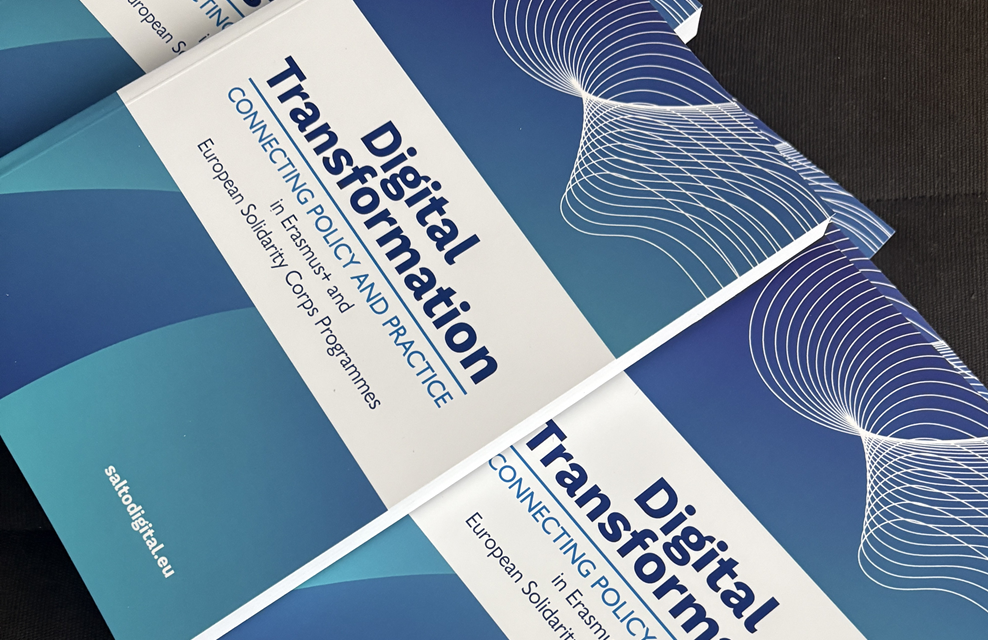
Digital transformation is changing not only how we learn, work and communicate, but also how we participate in society. The new publication Digital Transformation – Connecting Policy and Practice in Erasmus+ and European Solidarity Corps Programmes explores how European policies, research and educational practice can contribute to a purposeful, inclusive and sustainable digital future.
Developed by the European SALTO Digital Resource Centre together with experts from across Europe, the book is intended to help Erasmus+ and European Solidarity Corps stakeholders translate the horizontal priority of digital transformation into evidence-based knowledge. It is also a valuable resource for organisations developing projects that aim to strengthen digital readiness, develop digital skills and competences and enhance democratic participation and institutional capacity.
The book is organised into four complementary parts. Digital Transformation in Policy Context introduces the European policies, frameworks and strategic objectives that shape digital transformation across education, training and youth work and contribute to strengthening resilience, inclusion, equal opportunities and active participation in society.
Research Insights into Digital Transformation presents findings from research into digital transformation within the Erasmus+ and European Solidarity Corps Programmes. It also examines good-practice projects, showing how broad policy priorities can be translated into concrete initiatives and organisational change.
The third part, Perspectives on Digital Transformation, is particularly relevant to democratic citizenship education. It explores the connections between digital transformation and participation in democratic life, common European values, civic engagement, inclusion and diversity and environmental sustainability. It also addresses digital pedagogy in the age of artificial intelligence, digital well-being and STEM education.
These connections are essential because democratic participation increasingly takes place in digital environments. Citizens need more than operational digital skills: they need to evaluate information critically, communicate responsibly, understand how digital platforms and AI influence their choices, respect the rights and dignity of others and participate confidently in online communities and democratic processes. Digital transformation can therefore support democratic citizenship only when it is human-centred, rights-based and accessible to everyone.
Finally, Future Directions and Recommendations considers the growing role of AI in society and outlines a distinctly European approach to digital transformation: one that is purposeful, responsible and sustainable rather than driven by technology alone.
By connecting policy, research and practice, this publication offers guidance for developing projects that strengthen not only digital competence, but also agency, participation, inclusion and active European citizenship.