[by LERNACON]
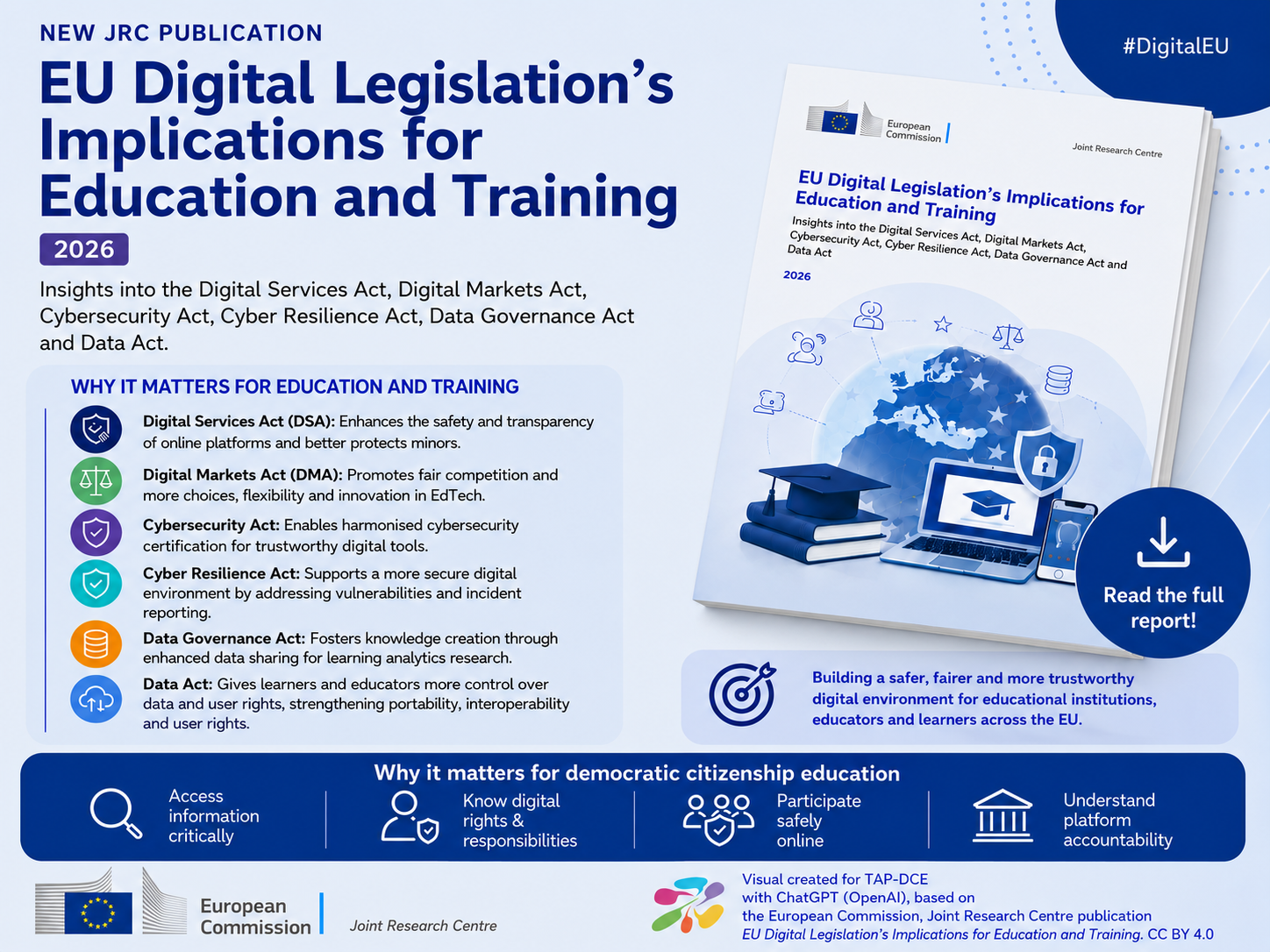
A new publication from the European Commission’s Joint Research Centre, EU Digital Legislation’s Implications for Education and Training, examines how six EU regulations, the Digital Services Act, Digital Markets Act, Cybersecurity Act, Cyber Resilience Act, Data Governance Act and Data Act, affect learners, educators, institutional leaders, educational institutions, policymakers and technology providers.
Although these regulations were not developed specifically for education and training, they influence teaching and learning in both formal and non-formal settings and affect educational stakeholders in different ways. Taken together, they help create a safer and more trustworthy digital environment for educational institutions, as well as better protection for educators and students, with special attention to minors.
These regulations form part of the wider EU digital acquis, also known as the digital rulebook, which governs emerging digital technologies, cybersecurity, online platforms and electronic communications. Other legislations within this framework, including the General Data Protection Regulation and the Artificial Intelligence Act, also have significant implications for education and training and require separate consideration.
Drawing on the original legislative texts and expert contributions, the brief provides a balanced overview of the opportunities and challenges these regulations present for students, educators, institutional leaders, policymakers and technology providers.
The publication is also highly relevant to democratic citizenship education because EU digital legislation influences how learners access information, exercise their rights, participate on online platforms and understand the responsibilities of digital service providers. By exploring issues such as transparency, protection of minors, platform accountability, cybersecurity, data governance and user rights, educators can help learners develop the knowledge and critical awareness needed to participate safely, responsibly and confidently in digital society.